Wall Putty vs Primer: What’s the Difference?

Wall Putty vs Primer: What’s the Difference?
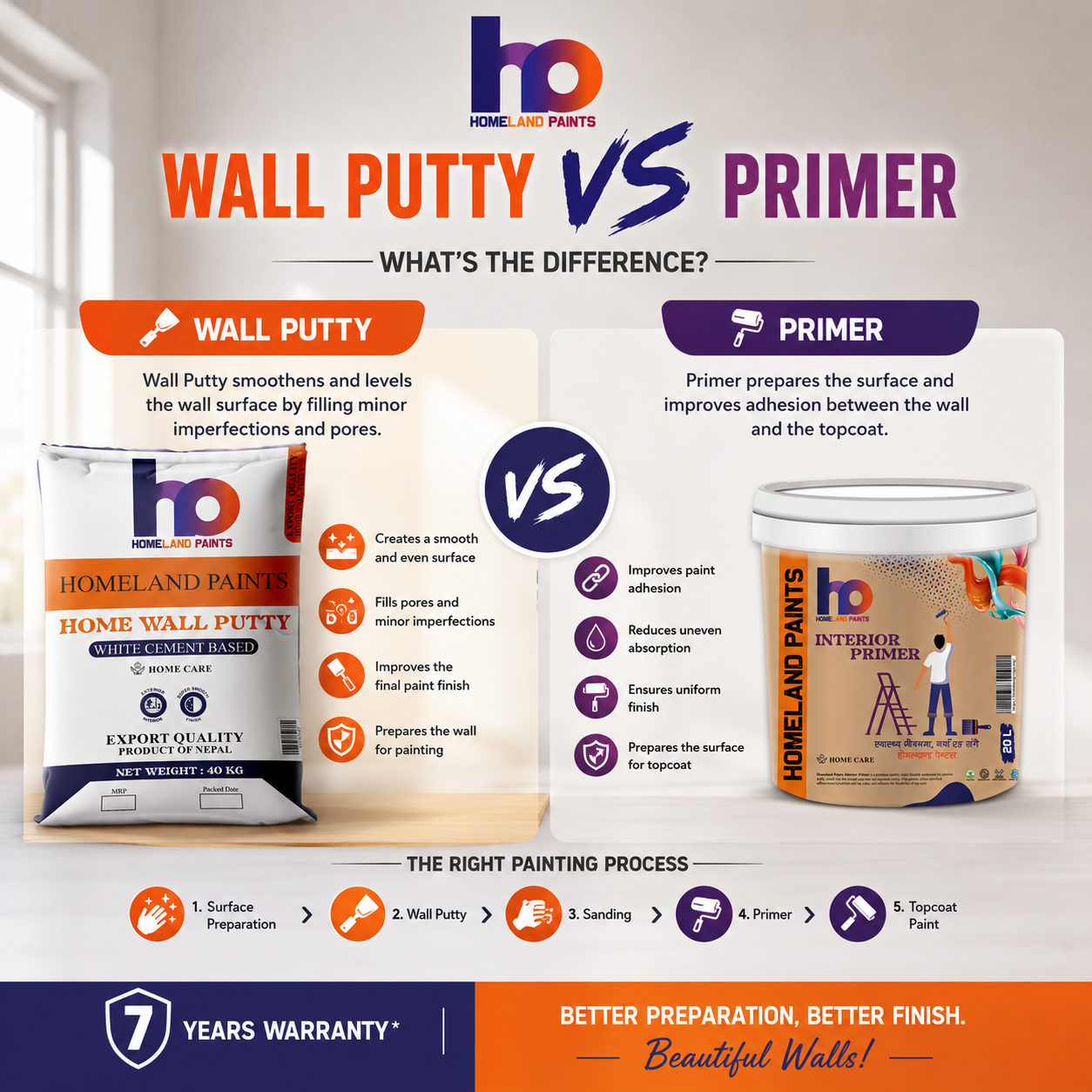
When it comes to painting a new house or renovating an existing one, Wall Putty and Primer are two important parts of the wall preparation process. However, many people often wonder whether they perform the same function.

The simple answer is no. Wall Putty and Primer have different purposes, and using them correctly can help create a smoother, more attractive and uniform paint finish.

In this guide, we’ll explain the difference between Wall Putty and Primer, their uses, benefits, and the correct order of application.

What is Wall Putty?

Wall Putty is a material used to improve and smoothen the surface of walls before painting. It helps fill minor surface imperfections, pores and uneven areas, creating a smoother base for the subsequent painting process.

A properly prepared wall surface can help improve the overall appearance and finishing of the paint.

Key Benefits of Wall Putty

  • Helps create a smooth and even wall surface
  • Helps fill minor surface imperfections
  • Improves the appearance of the final paint finish
  • Creates a more uniform surface for painting
  • Helps prepare the wall for the next stage of the painting process

Transform Your Home with Homeland Paints: Colors That Speak

What is Primer?

Primer is a preparatory coating applied before the final paint coat. Its primary purpose is to prepare the surface and improve the bonding between the prepared wall and the topcoat.

Primer can also help control surface absorption and contribute to a more uniform final appearance.

Key Benefits of Primer

  • Helps improve paint adhesion
  • Helps reduce uneven surface absorption
  • Creates a suitable base for the topcoat
  • Helps achieve a more uniform appearance
  • Prepares the surface for the final paint application

Wall Putty vs Primer: Key Differences

Feature Wall Putty Primer
Main Purpose Smoothens and levels the wall surface Prepares the surface for final paint
Primary Function Helps correct minor surface imperfections Helps improve adhesion and uniformity
Applied For Surface preparation Paint preparation
Result Smoother wall surface Better-prepared base for topcoat
Application Stage Usually before primer Usually after surface preparation/putty

Which Comes First: Wall Putty or Primer?

In a typical wall-painting system, Wall Putty is applied before Primer.

The general process is:

Wall Preparation → Wall Putty → Sanding → Primer → Topcoat Paint

1. Wall Preparation

First, the wall should be cleaned and prepared by removing dust, dirt, loose particles and other contaminants.

2. Wall Putty

Wall Putty is then applied where required to help smoothen the surface and correct minor imperfections.

3. Sanding

Once the putty has properly dried, sanding can be carried out as required to achieve a smoother and more even surface.

4. Primer

An appropriate primer is applied over the properly prepared surface. This helps create a suitable base for the final paint.

5. Topcoat Paint

Finally, the selected topcoat paint is applied according to the recommended painting system and application procedure.

Can You Apply Primer Without Wall Putty?

It depends on the condition of the wall and the recommended paint system.

If a wall is already sufficiently smooth and suitable for painting, putty may not always be necessary. However, uneven or porous surfaces may require additional surface preparation to achieve the desired finish.

The right approach should be determined based on the surface condition and the manufacturer’s product recommendations.

What Happens If You Paint Without Primer?

Applying final paint directly without an appropriate primer can result in uneven absorption, which may affect the appearance and overall performance of the paint system.

Primer is particularly useful on new or highly absorbent surfaces because it helps prepare the surface for the topcoat.

Why Is Wall Preparation Important for a Better Paint Finish?

A high-quality paint alone is not enough to achieve a professional-looking finish. Proper surface preparation is equally important.

Poorly prepared surfaces can lead to:

  • Uneven paint appearance
  • Visible surface imperfections
  • Poorer paint adhesion
  • Uneven absorption
  • Higher paint consumption
  • An inconsistent final finish

That is why the complete painting system—from surface preparation to the final coat—should be carried out properly.

Get a Better Wall Finish with Homeland Paints

A beautiful and attractive wall finish starts with the right preparation. Choosing the appropriate Wall Putty, Primer and Topcoat Paint according to the surface condition can make an important difference to the final result.

Homeland Paints provides a range of painting solutions designed for different surface and project requirements. Choose the appropriate painting system based on your wall condition and product recommendations.

Homeland Paints

Quality That Makes Your Walls Stand Out.